
| Specification | Details |
|---|---|
| Product Name | Burette Clamp |
| Material | Laboratory Grade Plastic (PP) with Chemical-Resistant Components |
| Type | Double Burette Clamp |
| Compatibility | Suitable for Standard Retort/Ring Stands |
| Grip Type | Adjustable Non-Slip Clamp |
| Chemical Resistance | Excellent Resistance to Common Laboratory Chemicals |
| Reusable | Yes |
| Applications | Burette Holding, Titration & Laboratory Experiments |
| Suitable For | Educational, Clinical, Pharmaceutical & Research Laboratories |
All, Plasticware
Burette Clamp
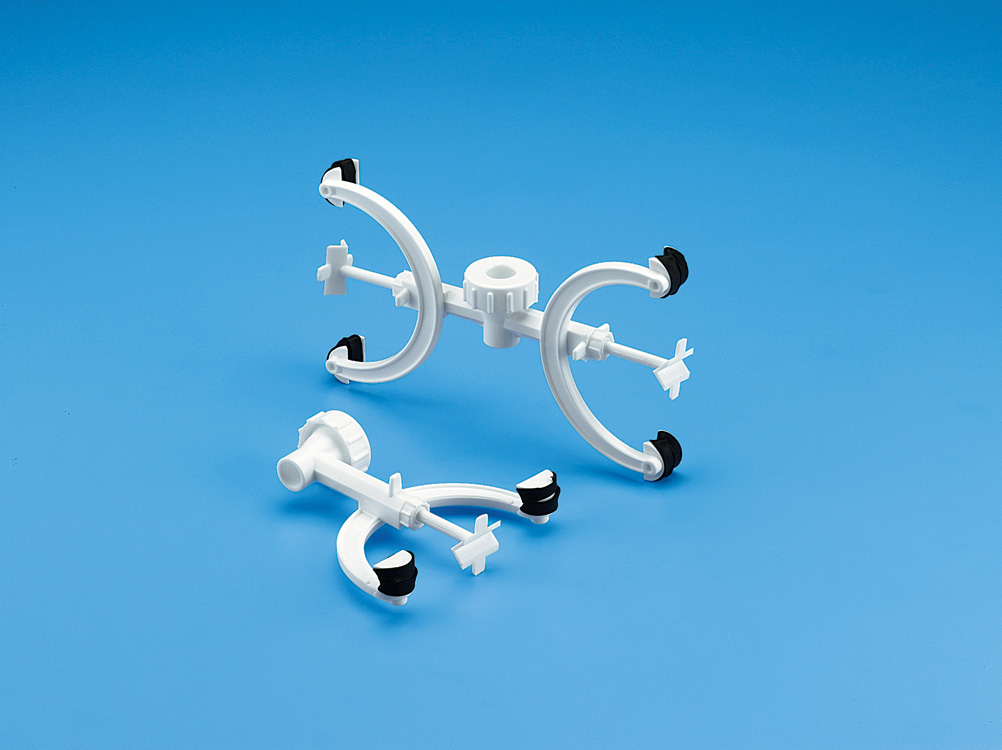
A Burette Clamp is a laboratory support accessory designed to securely hold one or two burettes during titration and analytical experiments. Manufactured from high-quality chemical-resistant materials, it provides excellent stability, firm grip, and precise positioning for safe laboratory operations.
- Manufactured from high-quality laboratory-grade plastic for durability and long-lasting performance.
- Designed to securely hold one or two burettes during titration experiments.
- Adjustable non-slip gripping mechanism ensures firm and stable positioning.
- Excellent chemical resistance makes it suitable for routine laboratory use.
- Compatible with most standard laboratory retort and support stands.
- Lightweight, reusable, and easy to install or remove.
- Ideal for chemistry, pharmaceutical, biotechnology, educational, quality control, and research laboratories.
The Burette Clamp is an essential laboratory accessory used to securely mount burettes onto retort stands for accurate titration and liquid dispensing procedures. Constructed from durable laboratory-grade plastic with corrosion-resistant components, it offers excellent chemical resistance and long service life.
Its adjustable gripping mechanism firmly holds single or double burettes without causing damage, while the non-slip jaws ensure stable positioning throughout the experiment. The clamp is lightweight, easy to install, and compatible with most standard laboratory retort stands. It is widely used in chemistry laboratories, pharmaceutical industries, educational institutions, quality control laboratories, and research facilities.


