
| Specification | Details |
|---|---|
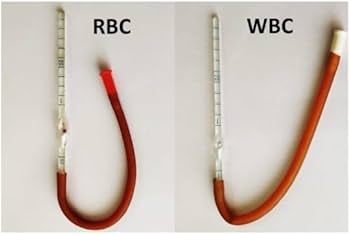
| Product Name | RBC and WBC Pipette DSI-31 |
| Category | Hematology Laboratory Accessories |
| Product Type | Blood Diluting Pipette |
| Material | Laboratory-Grade Glass with Rubber Tubing |
| Construction | Precision-calibrated capillary tube with integrated mixing chamber and rubber mouthpiece |
| Application | Manual dilution of blood samples for RBC and WBC counting |
All
RBC & WBC Pipettes
The RBC and WBC Pipette DSI-31 is a specialized hematology laboratory accessory designed for the accurate dilution of blood samples prior to manual red blood cell (RBC) and white blood cell (WBC) counting. Manufactured from high-quality laboratory glass with a precision-calibrated capillary tube and durable rubber tubing, these pipettes ensure reliable sample preparation for microscopic analysis. Commonly used in clinical laboratories, pathology laboratories, medical colleges, and research institutions, they provide dependable performance for routine hematological examinations and educational laboratory training.
- Precision-calibrated capillary tube for accurate blood dilution.
- Designed specifically for manual RBC and WBC counting procedures.
- High-quality laboratory glass ensures reliable performance.
- Integrated mixing chamber promotes uniform sample dilution.
- Durable rubber tubing provides comfortable sample aspiration.
- Clear graduation markings for improved measurement accuracy.
- Easy to clean and suitable for repeated laboratory use.
- Ideal for clinical, educational, and research hematology applications.
- Widely used in hematology, pathology, and diagnostic laboratories.
- Suitable for preparing diluted blood samples before microscopic cell counting.
- Commonly used in medical colleges and laboratory training programs.
- Clean thoroughly after each use to maintain measurement accuracy.
- Store in a clean, dry, and protective environment to prevent breakage.
- Compatible with standard hematology counting chambers and laboratory microscopes.
- Handle carefully to preserve the accuracy of calibration markings and glass components.


